
For a Human Digital Space
Tonight, between 7:00 PM and 10:00 PM, a young person will open a Twitch chat and write something they wouldn’t have told anyone else. Perhaps a dark thought. Perhaps just a simple “I’m not doing well.” On the other side, there is someone. A Digital Outreach Worker from the Virtual Guardians Foundation, trained to be there, in that specific moment, using that specific language. To us, that is what a human digital space looks like.
A Guiding Principle, Not a Slogan
Since 2018, we have made a simple but demanding choice: to go where young people already are. We meet them in their own spaces and offer support directly within their communities, through a structured and professional human presence. Because behind every screen, there is someone. And that person deserves to find a listening ear and support, even online, even at 9:30 PM on a Tuesday night.
Our Digital Outreach Workers
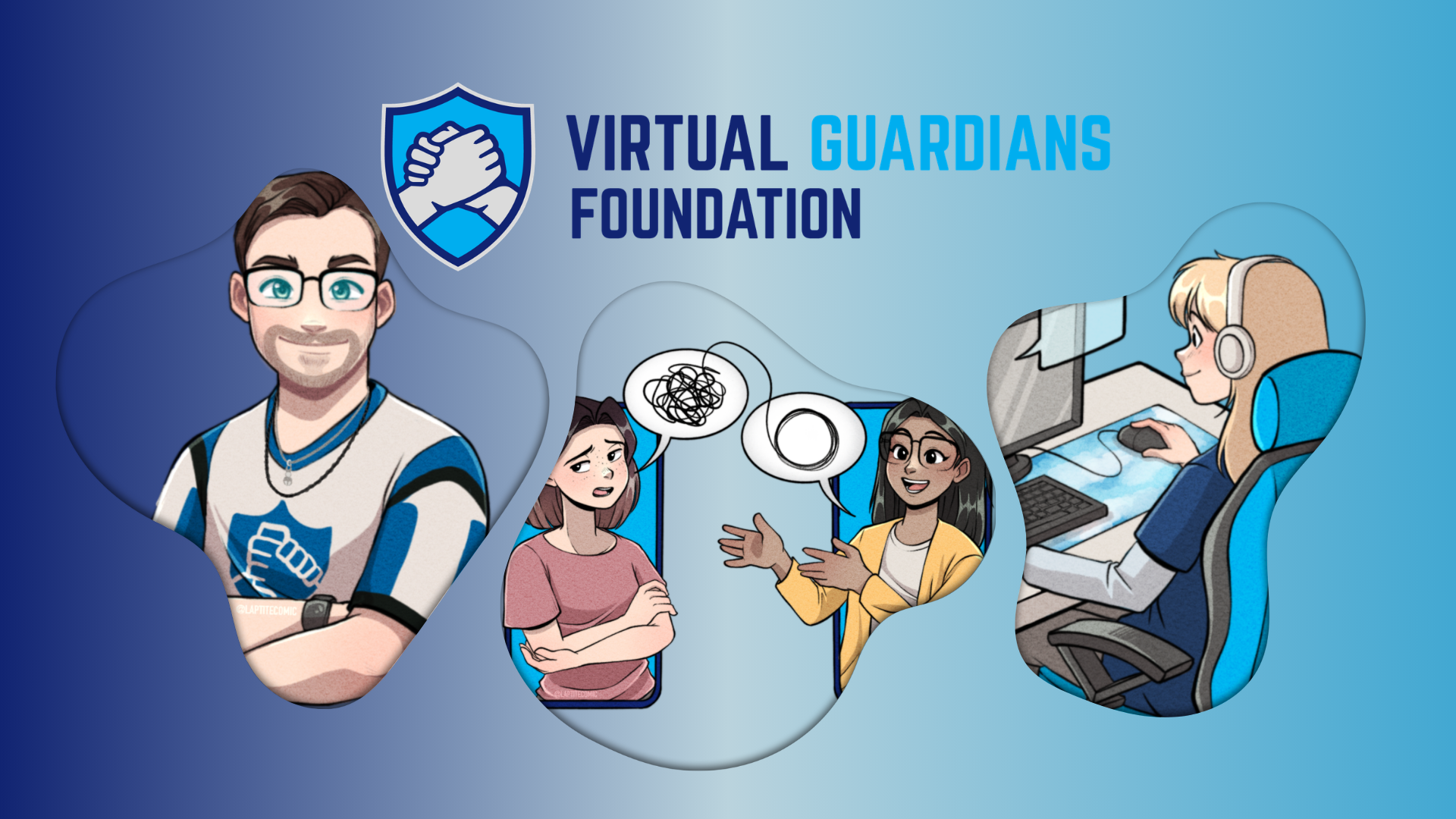
Our Digital Outreach Workers are not moderators. They are trained and supervised professionals, present every evening from 7:00 PM to 10:00 PM on Twitch and Discord. They intervene via text, in real-time, within contexts that are often fast-paced and sometimes fragile. Each operates under a pseudonym rooted in gaming or digital culture, because trust is built through the right language, not the right form.
In 2025: 1,888 direct interventions. 419 related to distress and suicidal ideation. 60 channels covered. An average of 163 interventions per Digital Outreach Worker, per year. Furthermore, 25% of those reached are members of the LGBTQ+ community, a population often invisible in traditional services. These figures are not abstract statistics. They represent conversations that took place because someone was there at the right time.
Four Ways to Make It Concrete
- Humanizing digital spaces. Online environments influence us far more than we think. They can provide support, but they can also amplify distress. Adding a human presence changes something fundamental: someone can be seen, heard, and recognized. These environments become a little less impersonal, a little less cold.
- Intervening before things escalate. Too often, we act only when a situation is already critical. By being present directly in digital environments, we can foresee certain issues, intervene earlier, provide guidance, and de-escalate. It doesn’t solve everything, but it prevents fragile situations from turning into crises.
- Transforming field experience into useful knowledge. What we experience on the digital front is rich with insight. But if it stays in the minds of the workers, it serves few people. In 2025, we facilitated more than 20 training sessions, workshops, and conferences at UQTR, UQAM, within the Armed Forces, and even at an international symposium in Switzerland. We are working to make this expertise transferable to other organizations and practitioners. This is also how we advance the field.
- Evolving practices. Technology moves fast : systems, much less so. If we want things to change, we must bridge the gap between the two. We participate in debates, consultations, and think tanks. Not to discuss theory, but to bring back what we actually see on the ground. Because if we don’t understand what is happening online, we make poor decisions offline.
No Longer Marginal
In 2025, the Quebec gaming community raised over $100,000 during the LAN JDL Stream-O-Thon to fund the Digital Outreach Worker program. Players, streamers, and enthusiasts chose to put their energy toward mental health within their own communities. This is proof that the idea of a human digital space resonates far beyond our organization.
The digital world directly influences mental health, relationships, and life trajectories. It is no longer a marginal reality. Therefore, the real question is no longer whether we should intervene, but how we do it and how seriously we take it.
For us, the answer is clear: we can no longer design services alongside the digital world. We must integrate them into it. Every night, from 7:00 PM to 10:00 PM, that is exactly what we have been doing for three years now.
The digital landscape will continue to change. Rapidly. We cannot control everything. But we can choose how we position ourselves within it. Choose to be present. Choose to understand. Choose to act. For a human digital space, that is exactly what it takes.
